Be yourself; Everyone else is already taken.
— Oscar Wilde.
This is the first post on my new blog. I’m just getting this new blog going, so stay tuned for more. Subscribe below to get notified when I post new updates.
Be yourself; Everyone else is already taken.
— Oscar Wilde.
This is the first post on my new blog. I’m just getting this new blog going, so stay tuned for more. Subscribe below to get notified when I post new updates.

By Kyle Ellington
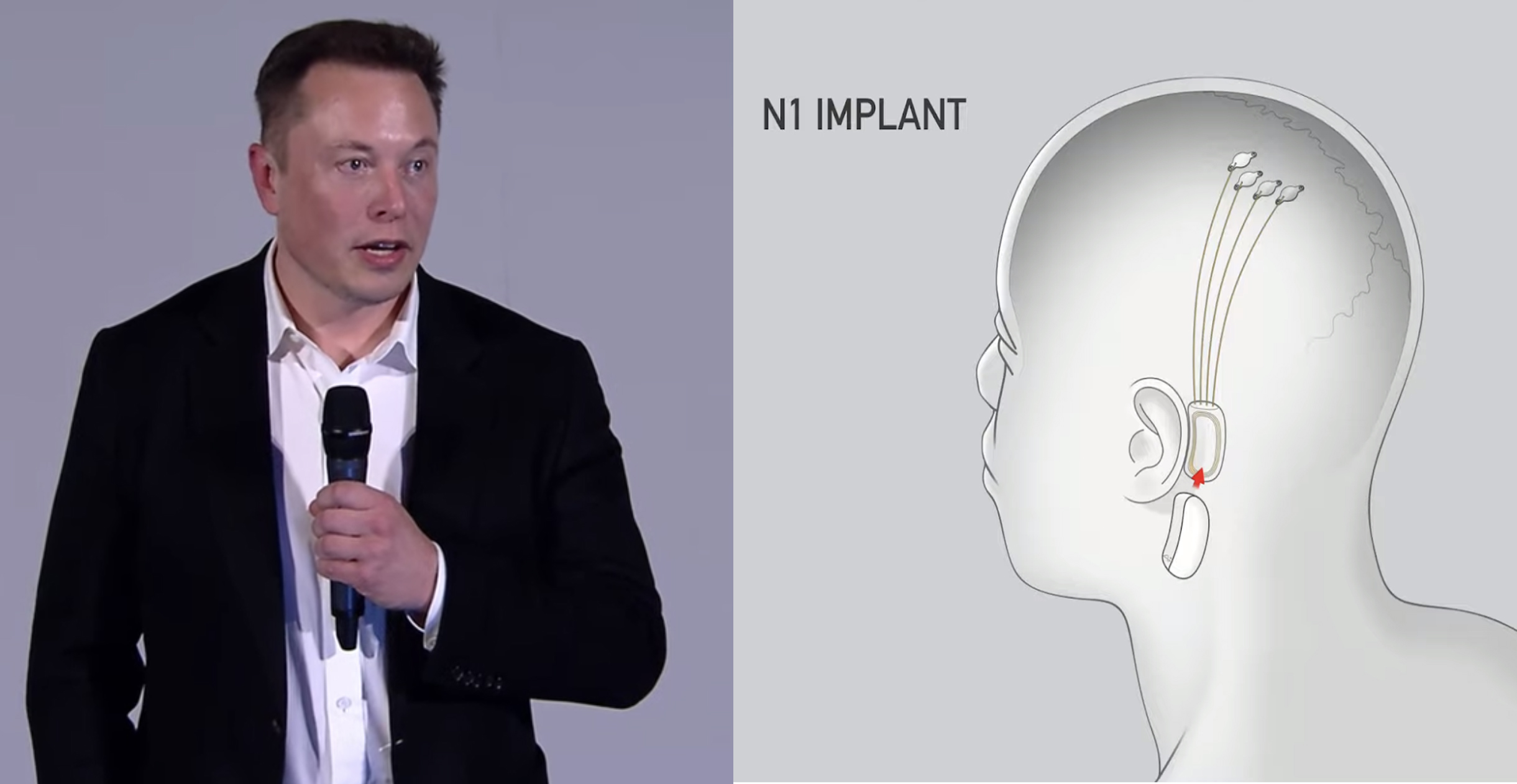
Elon musk is discussing the ability to surgically attach Bluetooth to a person’s brain and in a sense connect the mind to technology, literally. The tech entrepreneur claims that the technology would allow people to repair motor functions with telepathy and connect users to their iPhone to control themselves he is calling it Neuralink.
The idea sound like something that would come out of a comic book or an episode of black mirror. The way that the technology would work is 1,000 tiny chips that measure one-tenth of the human hair. Musk said that the interface would be wireless “so you have no wires poking out of your head. That’s very important” Musk said. The way that Musk describes how the operation would be done a robot that is being operated by a surgeon would drill a 2-millimeter hole in the skull which would then to process to be plunged by the chip part of the device. Trials have the possibility of starting by the end of 2020.
Musk said this is for AI to have a positive effect on humanity. The idea of controlling things with your mind would sound enticing to people but at the same time will it bring about some fears and concerns. The conclusion that many people jump to is a terminator style future in which Skynet is preparing to take over the world and this is the first step and judgment day will come soon.
The idea is very cool and the positives sound great but what are the negatives that can come from this what if it doesn’t work and this causes more damage to the human brain a lot of people are probably not going to be too excited about have machinery drilled into the head and how much would it cost to do such a procedure.
The question of the ethics could be called into question with the device and the idea that people are going to be even more plug into technology is an interesting discussion that could be talked about but what could be more interesting is that if it is successful how many people are actually going to go through with it.

By Kyle Ellington
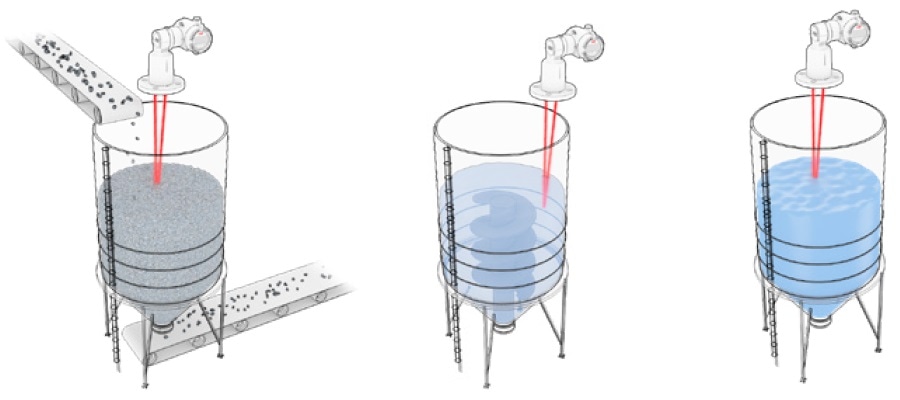
Scientist from Missouri and Mexico’s Universidad Guanajuato have come up with a new way to check the purity of water. The way they approached this method is by using a tattoo removal laser to flash burst of lights lasting 10 nanoseconds, the lights travel through fiber optic cables. The end of the cable is submerged in water which then coverts the light into sound. The laser uses sonar technology to measure the purity of a liquid. They measure the length of time between each of the laser flashes and how long it takes for the sound to reach.
The way that this measures how pure a water can be is by seeing how quickly sound waves are traveling through water and if there is something in the water it causes the sound waves to slow down. The problem with this is that it doesn’t exactly tell you what is inside the water it can tell you whether the liquid sample is pure but not what is contaminating it. This is a very interesting way that liquid has been tested of its purity, I don’t believe that lasers have ever been used in such a way before this can help a lot in the future if the research can continue.
The only problem is that the technology doesn’t help tell you what exactly is causing the contamination which can be a huge issue by not knowing what is exactly is inside the water. It will be interesting to see what they do to rectify that; they could quite possibly measure the time by mixing different elements inside water to see what the difference in time is so they can have a clear vision of what causes the contamination.
It will be interesting to see if water bottle companies or water filter companies will be using this method to measure the purity of their own water or if anybody will try such an experiment the results would be very eye opening. This could tell you exactly how well a filter is keeping your water clean or how pure the water that we consume in bottles are.


By Kyle Ellington
A newly developed glove promises to advance the tech significantly by getting real physical movement accurately depicted in the digital world. It’s able to capture hand movements with much more detail and distinction than most.
The researchers behind the creation of the glove created a silicone compound holding 44 embedded stretch sensors, combining it with a soft fabric layer. The device requires uses a special constructed set of algorithms to process the sensor data coming through and from the gloved hand.
This means highly accurate hand and finger movements can be captured in real time. No external cameras or sensors are needed to record the movements, and the gloves themselves can be manufactured at a low cost. They’re also lightweight and comfortable to wear too.
“This is an already well-studied problem but we found new ways to address it in terms of the sensors employed in our design and our data-driven model,” Oliver Glauser from ETH Zurich in Switzerland said in a press statement.
He also added that it took expertise from various fields, including material science, fabrication, electrical engineering, computer graphics, and machine learning.
The glove can still capture movements even when the hand is holding something, the researchers say, and because of the configuration of its sensors, it can work in all kinds of lighting conditions too. No cameras involved, the glove doesn’t need to be well lit or within a line of sight.
Aside from giving you more accuracy on your next virtual reality adventure, the glove could have applications in robotics, the biomedical industry, and augmented reality.
As of now it cannot track a hand in 3D space, only the movements of the fingers. While the glove knows you’re pointing, it won’t know which direction you’re pointing in.
This invention will most likely need to work in conjunction with other technology to provide a complete solution.
The idea that a glove can help enhance real physical interaction in the digital world can really help with any designs. Since real world scenes are augmented with computer graphics this can help with more detailed designs that people come up with.

By Kyle Ellington
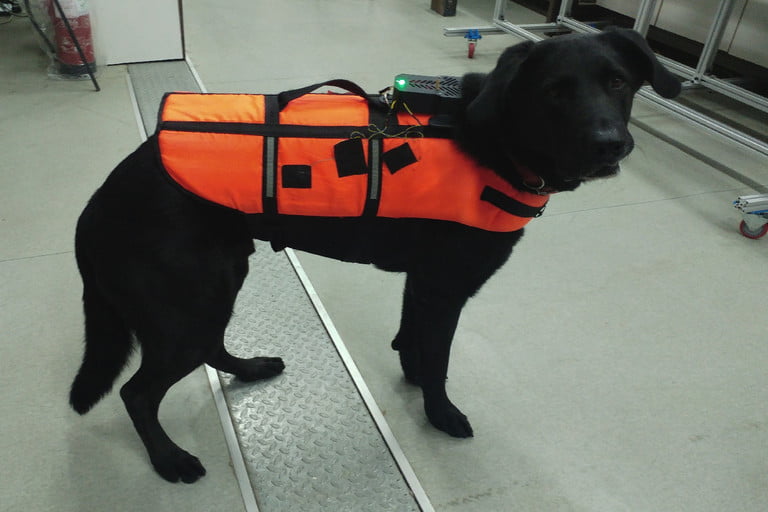
Dogs are some of the smartest and most loyal animals on the planet people train them to do specific tasks for them such as helping blind people or even being rescue dogs. Now Ben-Gurion University in Israel, researchers have found a new way to interact with these animals: Giving dogs a haptic jacket that can be used to provide instructions through specific vibrations. With this vest people could communicate with dogs from a far distance using the click of a mouse or the tap of a mobile device in scenarios when other forms of communication are not available. Researcher Yoav Golan said, “We developed a dog vest that has four embedded vibration motors” the team used their prototype device to demonstrate that it is possible for dogs to learn multiple haptic commands in a way that could prove useful. They were able to demonstrate that dogs could tell the difference between two different-but-similar signal patterns. They taught the dog a “spin” command, as well as a “walk backward” command.
The first of these was signified by a constant vibration on its front-right side. The second was signified by a pulsing vibration at the same location. The dog was successfully able to tell the difference between the two commands, showing that a small number of motors can be used to send a potentially large number of different commands.
For the next step in theses stages researchers aim to test out the technology on many dogs of varying breeds, ages and training backgrounds. This will give a better idea of how quick some dogs are to learn haptic commands, what type of commands are easier to distinguish, and details such as how different types of fur affect received sensations.
The device presents a lot of positive possibilities on how rescue dogs will be used in the future. To be able to just send a signal of various commands to dogs will make things far more efficient during times of natural disasters or even search and rescues especially since you can send them at a long distance.

By Kyle Ellington
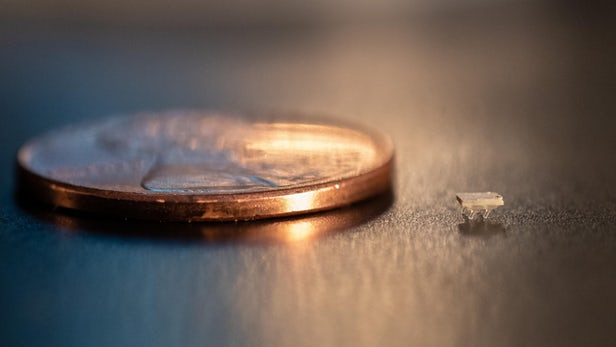
Micro robots that are able to move inside the human body, it sounds like something that has come straight out of a sci-fi movie but it seems that the idea is very possible and could one day happen that’s why Georgia Tech’s new “micro-bristle-bots” are.
The robots are propelled by using vibrations instead of battery, the robots are 3D printed out of polymer resin, via a process known as two-photon polymerization lithography and each one has either four or six springy “legs”.
When vibrations are delivered to the robot via either a shake table, an external ultrasound/sonar source, or a tiny acoustic speaker, those vibrations cause the angled legs to move up and down, propelling the robot forward. The onboard actuator can also produce the vibrations when subjected to an electrical current, although that current presently must come from a hard-wired source. Later in the future it may be possible to wirelessly activate the actuator using electrical fields.
The amplitude of the vibrations determines the speed at which the robots move. The bots can be designed to respond to different vibrational frequencies. Therefore, by linking together two differently designed robots that respond to different frequencies, it should be possible to steer the two by varying the frequency and amplitude of the vibrations.
“We are working to make the technology robust, and we have a lot of potential applications in mind,” assistant professor Azadeh Ansari said in a release
The possibilities that this invention presents is endless at what it can do for medical science. You could be able to inject tiny robots with little cameras into the blood stream of a patient to determine if there is anything wrong with them medically that can’t be shown on an x-ray.
Hundreds of the devices have already been created, and the researchers are now looking at ways of scaling up the manufacturing process, so that thousands could be made at once.
The idea that you can steer them with vibrations is even better because they won’t have to worry about what would happen if one were to die.
There could also be the possibility that if there is enough progress that is done with the robots that they could even treat injuries within the human body that may to deemed too difficult by the medical staff.
This is an example post, originally published as part of Blogging University. Enroll in one of our ten programs, and start your blog right.
You’re going to publish a post today. Don’t worry about how your blog looks. Don’t worry if you haven’t given it a name yet, or you’re feeling overwhelmed. Just click the “New Post” button, and tell us why you’re here.
Why do this?
The post can be short or long, a personal intro to your life or a bloggy mission statement, a manifesto for the future or a simple outline of your the types of things you hope to publish.
To help you get started, here are a few questions:
You’re not locked into any of this; one of the wonderful things about blogs is how they constantly evolve as we learn, grow, and interact with one another — but it’s good to know where and why you started, and articulating your goals may just give you a few other post ideas.
Can’t think how to get started? Just write the first thing that pops into your head. Anne Lamott, author of a book on writing we love, says that you need to give yourself permission to write a “crappy first draft”. Anne makes a great point — just start writing, and worry about editing it later.
When you’re ready to publish, give your post three to five tags that describe your blog’s focus — writing, photography, fiction, parenting, food, cars, movies, sports, whatever. These tags will help others who care about your topics find you in the Reader. Make sure one of the tags is “zerotohero,” so other new bloggers can find you, too.

 Site Title